
knowledge

Martin Koopmans: “No crisis ever unfolds according to plan, and that is exactly why you need to practise”

According to Martin Koopmans, cyber crisis readiness is not about detailed playbooks or theoretical scenarios, but about something far more practical: knowing what to do when things go wrong and having genuinely practised it. “No two crises are the same. But if you practise, you at least know who is responsible for what, how the […]

Martin Koopmans: “No crisis ever unfolds according to plan, and that is exactly why you need to practise” Read More »

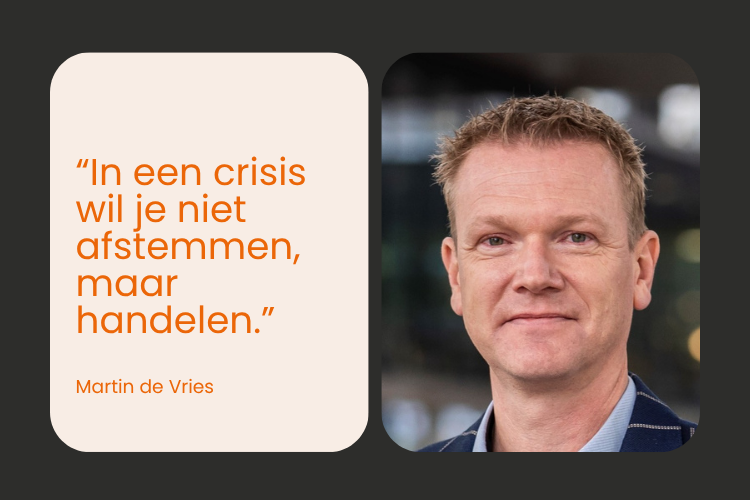
Martin de Vries: “During a crisis, the adrenaline is right up to your scalp: that’s why you have to practise”

Martin de Vries is CISO at VDL. Before that, he held the same role at Eindhoven University of Technology (TU/e), where he experienced up close how a cyber crisis can turn an organisation upside down in an instant. In this interview, Martin shares what crisis exercises actually mean when it’s real. How practising ensures you

Martin de Vries: “During a crisis, the adrenaline is right up to your scalp: that’s why you have to practise” Read More »

Cees Berrens: “Cyber crisis readiness isn’t a plan, it’s behavior under pressure”

A cyber crisis rarely announces itself neatly. There’s no starting gun, and almost never immediate, complete clarity. There’s a report, a suspicion, a few signals that don’t add up. And meanwhile, everyone is looking at the same people in the organization with one expectation: take control and fix it. According to Cees Berrens, that is

Cees Berrens: “Cyber crisis readiness isn’t a plan, it’s behavior under pressure” Read More »

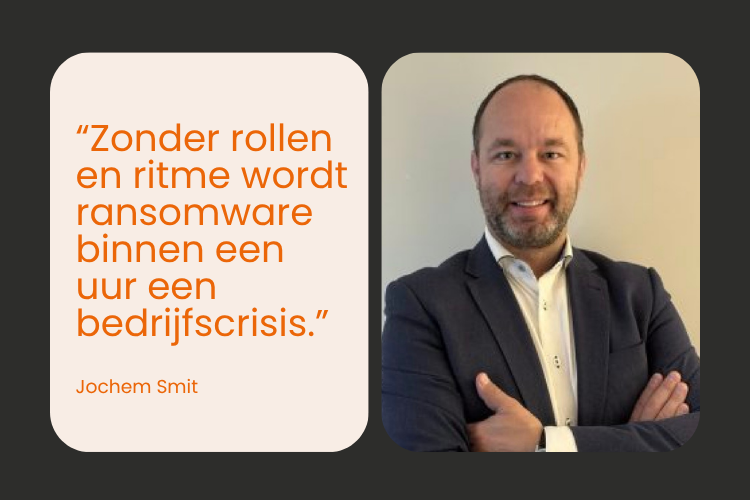
Jochem Smit: “The aftermath of ransomware is often worse than the attack”

Jochem Smit is a Senior Crisis Management Trainer at CCRC and brings hands-on experience from real ransomware incidents. At Northwave, he was one of four senior crisis managers responding to major cyber incidents. “They were all ransomware cases.” In those situations, an organization’s infrastructure is partly or completely down. Companies, often via their insurer, quickly

Jochem Smit: “The aftermath of ransomware is often worse than the attack” Read More »

Jelle Niemantsverdriet: “The biggest vulnerability in a crisis is silence”

Jelle Niemantsverdriet is a Senior Crisis Management Trainer at CCRC, with more than twenty years of experience in cybersecurity and incident response. He has worked at Fox-IT, Verizon, Deloitte, and Microsoft, helping organizations respond to incidents and build crisis management capabilities. In this interview, he explains where teams often stumble, what makes an exercise truly

Jelle Niemantsverdriet: “The biggest vulnerability in a crisis is silence” Read More »

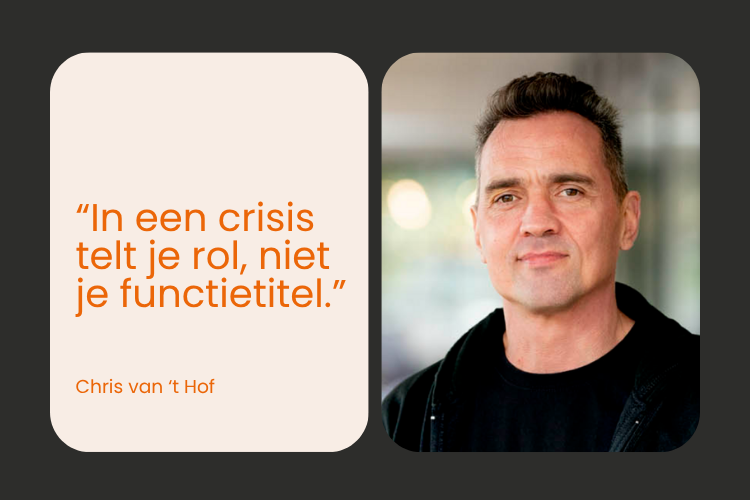
Chris van ‘t Hof: “In a crisis, you’re not automatically in charge, even if you’re the CEO of the company”

​Chris van ‘t Hof, as director of DIVD, is used to seeing vulnerabilities before they become incidents. But in CCRC crisis training, he sits on the other side of the spectrum: there he sees what happens once things do go wrong and how quickly a technical problem turns into a management stress test. He writes

Chris van ‘t Hof: “In a crisis, you’re not automatically in charge, even if you’re the CEO of the company” Read More »

Whitepaper
Cyberoefenen

Practicing with Cyber Crisis Situations: Resilience Requires Action

In recent years, I have guided numerous organizations in dealing with digital crises. I consistently see the same thing: it’s rarely the technology that fails, but often the collaboration and decision-making at critical moments. That’s why I found it valuable to contribute on behalf of CCRC to the new NCSC whitepaper: ‘Practice makes perfect.’ Why

Practicing with Cyber Crisis Situations: Resilience Requires Action Read More »

CCRC

From Checkboxes to Resilience: why Crisis Exercises Form the Core of Modern Digital Security

Compliant yet vulnerable An audit full of green checkmarks provides peace of mind. But false security lurks. Because when a targeted cyberattack brings your organization to its knees, compliance rarely equals actual resilience. In this blog, I share a personal conviction: true digital security doesn’t arise from paper standards, but from a culture of risk

From Checkboxes to Resilience: why Crisis Exercises Form the Core of Modern Digital Security Read More »